What to Expect From Your First Visit to Beyond Physio
What to Expect From Your First Visit to Beyond Physio
Booking your first physio appointment can feel like a bit of a mystery. Will they poke and prod at the sore bit? Do you need to bring anything? Will you walk out with a plan, or just a list of stretches and a "see you in a few weeks"?
If you've never been to physio before, or it's been a while, here's exactly what to expect when you walk through our doors in Tauranga or Papamoa, from your first assessment right through to how we track your progress over time.
Your Initial Assessment: More Than Just "Where Does It Hurt?"
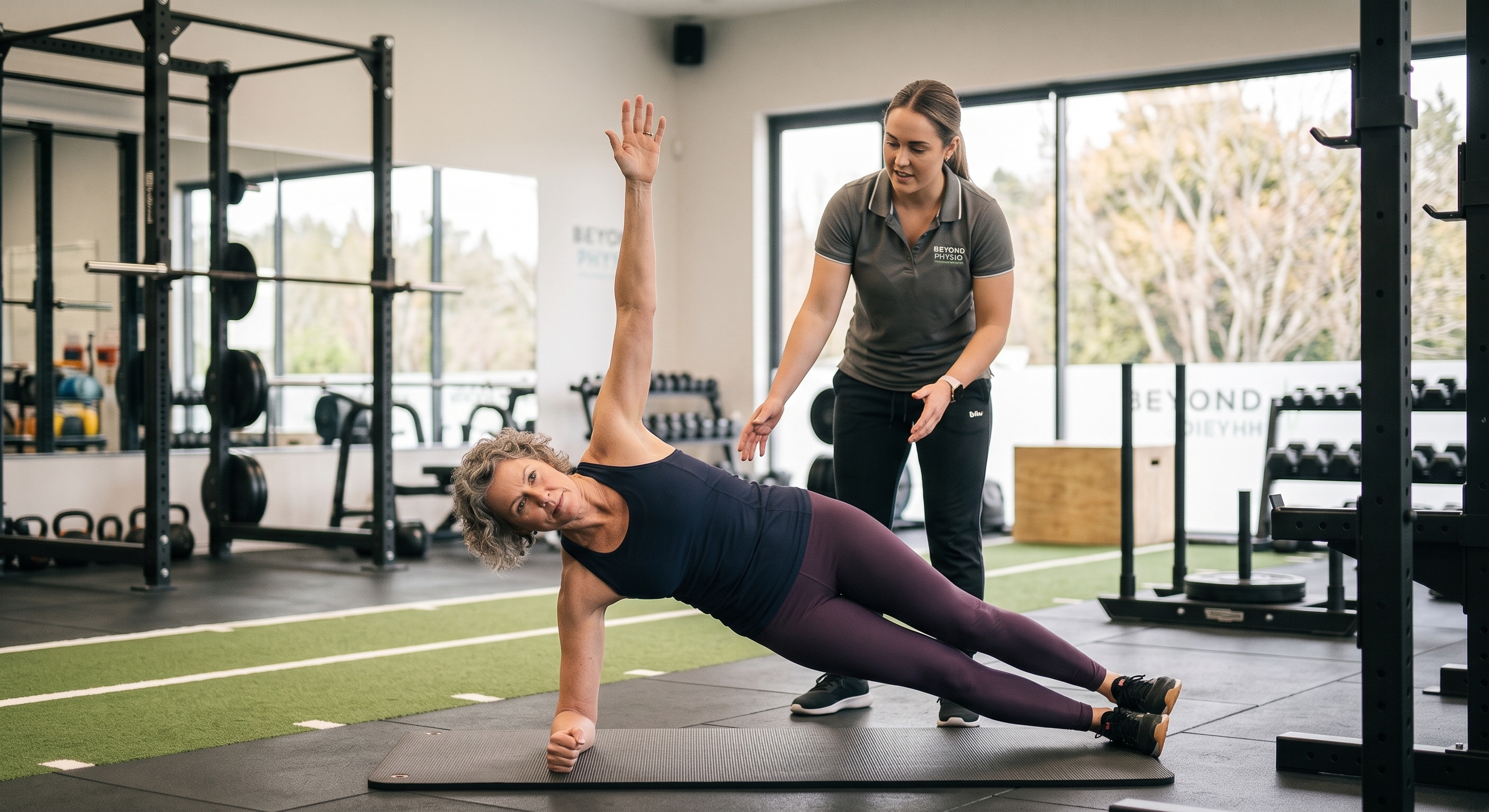
Your first session is about building a full picture, not just circling the sore spot on a diagram. We'll start by talking through your goals, your injury or issue, your training or activity history, and what "better" actually looks like for you, whether that's running the Mount without your knee flaring up, getting back to the gym floor, or just picking up your kids without wincing.
From there, we move into a hands-on physical assessment. This usually includes:
- Assessing your movement patterns and range of motion
- Testing strength around the affected area (and often the areas around it - pain rarely stays in one neat little box)
- Checking how your injury or issue is affecting your day-to-day function, not just how it feels in the clinic room
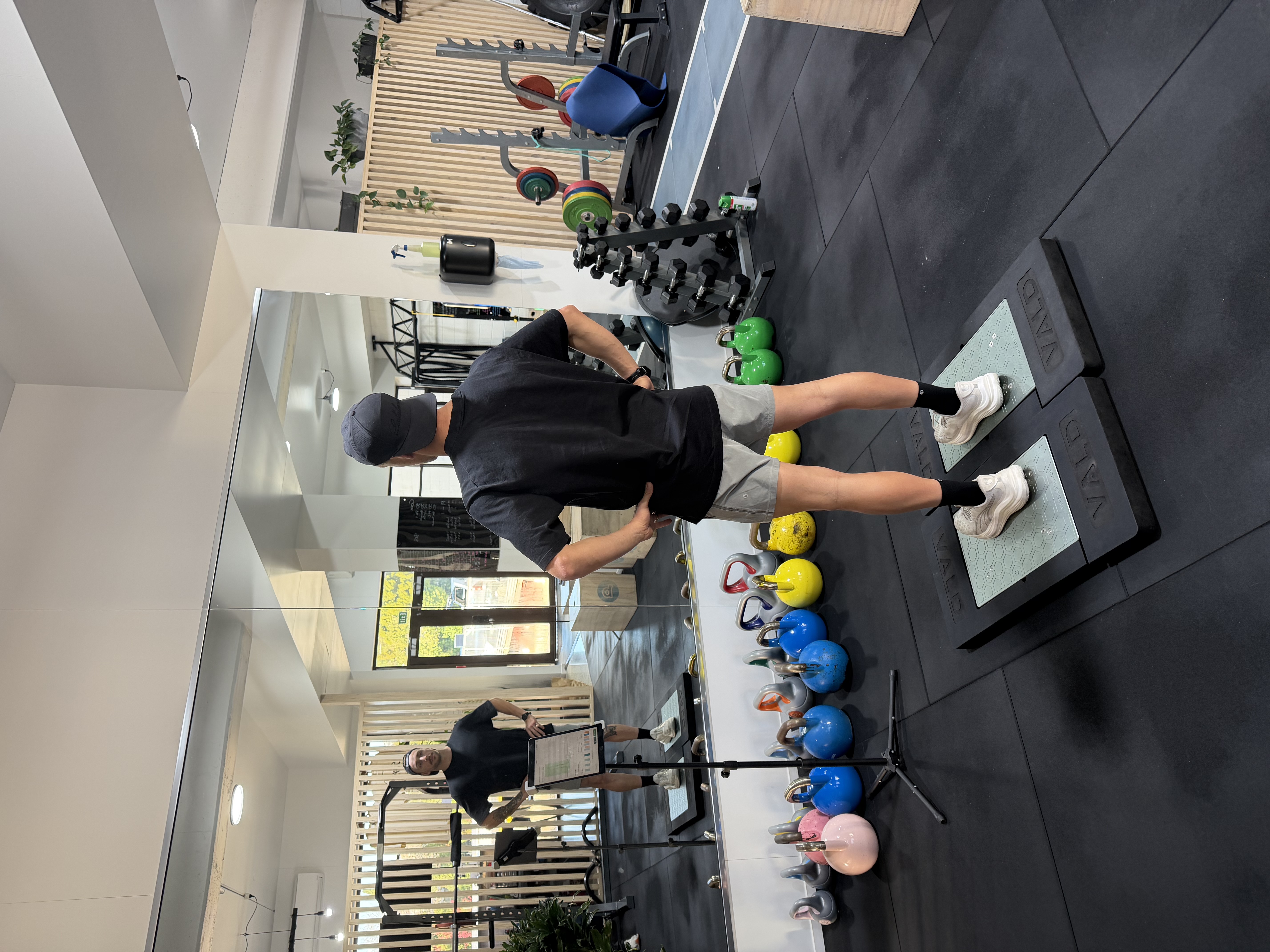
- Where relevant, running you through objective, tech-based testing on our VALD equipment (more on that below)
By the end of this first session, you should walk away with a clear working diagnosis (or at least a solid direction if more investigation is needed), a plan for what comes next, and realistic expectations on timeframes.
Adding Objective Data With VALD Testing
Physio has traditionally relied a lot on hands-on assessment and how you report your symptoms - both genuinely useful, but both a bit subjective. That's where VALD comes in. It's performance testing technology that lets us measure what's actually happening in your body, rather than relying on feel alone.
Depending on your injury or goals, this might include:
- Force plate testing - measuring how you jump, land, and load through each leg, which is brilliant for picking up side-to-side asymmetries after a knee or ankle injury
- Strength dynamometry - objectively measuring muscle strength (think quads, hamstrings, shoulder rotators) rather than us guessing off a manual muscle test
- Movement and landing mechanics - flagging compensations you might not even feel yourself
Why does this matter? Because it turns "that feels about the same as the other side" into an actual number. It helps us build a rehab plan around your specific deficits, and later, it gives us a genuinely objective way to track your progress, not just "does it feel better," but "are you actually stronger, and by how much."
Building a Plan Around Your Goals - Not a Generic Template
Once we've got a clear picture, we build your rehab plan around what you want to get back to. Two people with the same injury can end up with quite different plans, because their goals are different.
Training for a half marathon and just want to get back on the road? Your plan will lean into running-specific loading and return-to-run milestones. Post-op and your priority is simply getting back to pain-free daily movement before you think about the gym again? We'll pace things accordingly. Want to get back to lifting heavy at the gym? We'll build your strength progressions with that end point in mind.
This is also where having physios and personal trainers under one roof makes a real difference- your rehab doesn't have to stop at "clinically discharged." You can transition seamlessly from clinical treatment into structured gym-based training, with the same team who understands your history.
Follow-Up Visits: Frequent Early On, Then Spaced Out As You Progress
Your first visit is just the start. How often you'll see us from there depends on where you're at:
- Early phases are typically when we see you more often, this is when things are changing quickly, pain and function are still settling, and we want to make sure your plan is progressing at the right pace (not too fast, not too cautious).
- As you stabilise and build capacity, we space visits out. You'll be given more to manage independently between sessions - exercises, load progressions, and clear markers for when to push and when to hold steady.
- Every follow-up includes reassessment. We're not just running through the same exercises on repeat. We're checking your progress against your original baseline (including, where relevant, retesting on VALD) and adjusting the plan as you go: progressing exercises, adding load, or shifting focus as new goals come into play.
Many of our clients also use our app-based rehab programme between visits, so you've always got your current exercises, progressions, and tracking in your pocket, not just a photocopied sheet from session one.
Ready to Get Started?
Whether you're carrying a niggle from the weekend, coming back from surgery, or just want a proper assessment before it becomes a bigger problem, your first visit is about getting clarity: a real diagnosis, a real plan, and a team that adjusts it with you as you go.
Book a physio appointment at our Tauranga or Papamoa clinic today, or get in touch if you're not sure which service is the right starting point for you.